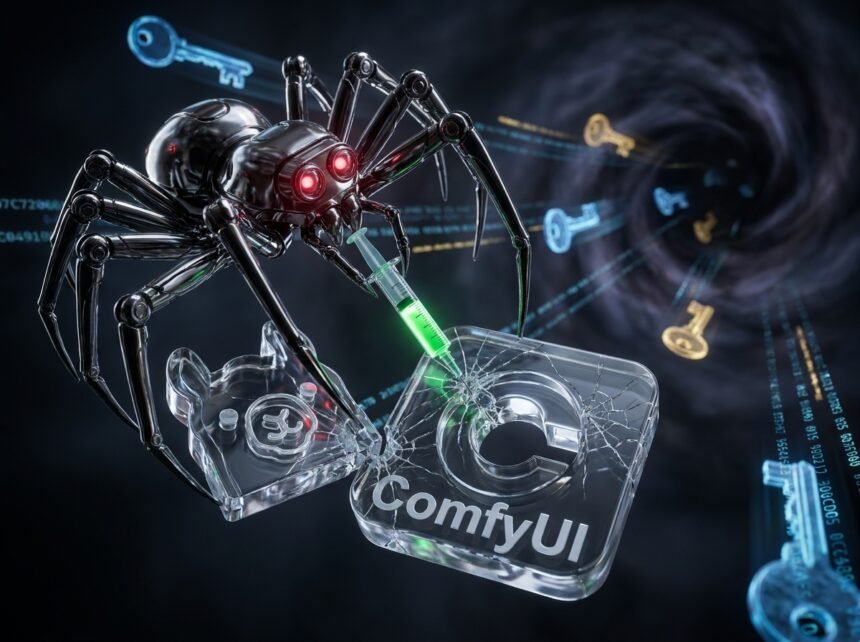
The rapid adoption of artificial intelligence has revolutionized developer workflows and creative processes. Open-source AI tools have empowered teams to run advanced models locally and generate stunning visual media. However, this rush to deploy has left a gaping hole in corporate security architectures. A highly sophisticated botnet has emerged from the shadows, actively hunting for poorly secured AI infrastructure. If you are running tools like Ollama or ComfyUI without proper authentication, your network might already be compromised.
The Problem: The Autonomous NadMesh Botnet
Cybersecurity researchers at XLab recently identified a dangerous new Go-based botnet named NadMesh. Operating as an autonomous threat platform, NadMesh integrates expansive cloud network scanning with dozens of exploitation pathways to compromise systems running Kubernetes, Docker, and Redis. However, its primary and most alarming focus is selectively hunting down rapidly deployed, internet-exposed AI workflow components.
Using harvesters like Shodan to maintain a constantly stocked scan queue, the botnet aggressively targets the default ports of popular image generators and local model executors. Chief among these targets are ComfyUI and Ollama, alongside other interfaces like Gradio, Langflow, and n8n. Because development teams often stand these tools up quickly for prototyping and fail to configure firewalls or authentication, they become effortless entry points for attackers.
Real-World Examples: What The Botnet Actually Steals
You might assume that hijacking an AI graphic generator or local model runner is only useful for stealing compute power, but this campaign is far more insidious. Once NadMesh breaches a system, it does not just want the host machine; it wants the keys to the entire kingdom.
- Cloud Keys and Tokens: The botnet meticulously scrapes environment variables and configuration files to exfiltrate AWS keys and Kubernetes service account tokens. The operator’s own dashboard was recently observed claiming thousands of unique, stolen AWS credentials.
- Model Inventories: The malware logs and catalogs the AI models present on the infected machines, tracking identifiers for powerful models like DeepSeek and GLM.
- Exploiting Model Context Protocol (MCP): NadMesh actively looks for exposed MCP implementations capable of executing remote commands. It uses JSON-RPC calls (such as
execute_command) to bypass traditional security perimeters and run arbitrary code without needing a specific zero-day vulnerability.

Advanced Topics: Redundant Persistence and Evolution
This attack wave represents a significant evolution in threat actor motives. Earlier in the year, researchers observed different campaigns hijacking exposed ComfyUI instances primarily to exploit GPU resources for mining Monero and Conflux cryptocurrencies. Today, the payoff has shifted drastically from cryptomining to total cloud compromise.
To ensure they never lose access to their prized AI targets, the operators behind NadMesh utilize heavily armored persistence mechanisms. The agent maintains its foothold using redundant methods, such as cron watchdogs and hidden SSH backdoors. Because removal is built to fail, if a security team finds and removes one backdoor, the others automatically bring the agent back to life. Furthermore, to evade standard antivirus detection, every malware build is obscured using advanced polymorphic tactics such as Garble obfuscation, UPX compression, and random padding ensuring no two payloads share the same file hash.
The Solutions: How to Secure Your AI Infrastructure
The most alarming aspect of this botnet is that it rarely relies on complex software patches or zero-day exploits. Instead, it preys on administrative functionality and exposed services left calling out to the public internet.
To protect your AI tools, security teams must adopt strict deployment policies:
- Enforce Authentication: Never expose model backends or workflow UIs like Ollama or ComfyUI directly to the public internet. Lock down their default ports behind robust zero-trust authentication gateways or private networks.
- Monitor Outbound Traffic: Because this malware aims to exfiltrate cloud credentials, implement strict egress filtering to detect and block unauthorized outbound connections from AI host machines.
- Employ Reputation Scanning: Utilize advanced endpoint detection platforms configured to delay execution for cloud reputation scans, which can help flag and block polymorphic agents before they root into the system.
As open-source AI continues to democratize technology, securing the deployment pipeline is no longer optional. Left unchecked, a simple exposed prompt interface can rapidly become the gateway to a catastrophic cloud breach.